












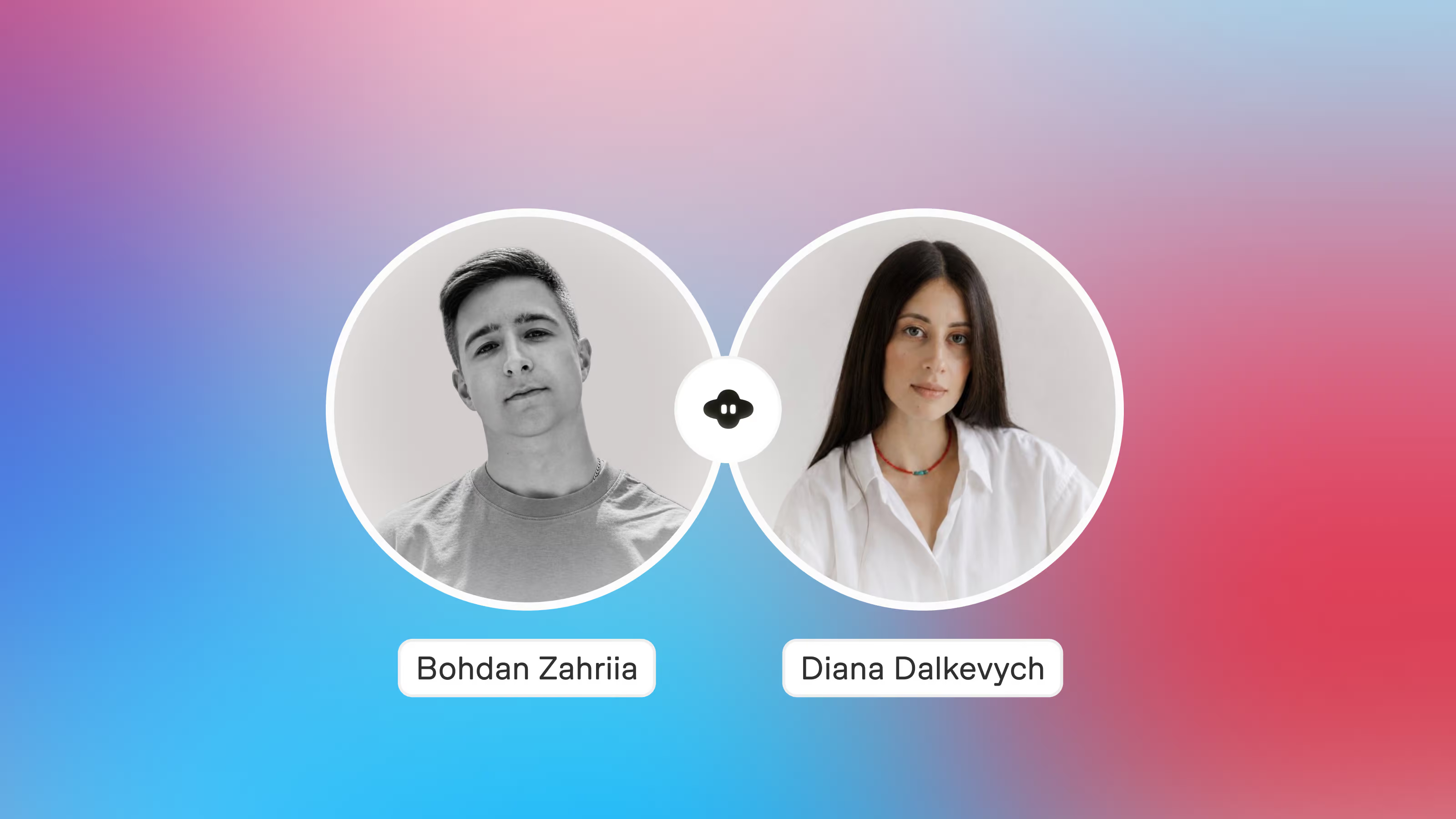
- In FinTech, trust is the growth bottleneck, not attention. A review of about 740 negative reviews of seven business banks and spend platforms found roughly four in ten were about losing access to money. Bohdan Zahriia measures the first real payment instead of sign-ups, because many accounts are opened as a backup and then go quiet.
- Growth experiments help find product-market fit, not just scale it. Spendbase Banking was planned for established businesses, but active accounts turned out to be 1–10-person companies registered in Estonia or the UK. Most of 100+ experiments were killed within weeks, while media and influencer partnerships grew into hundreds of thousands of dollars in pipeline at a ROAS above 12x.
- Small teams should run one main channel at a time and let marketing ship test pages the same day without developers. External partners earn their place with comparable FinTech experience, ownership beyond the narrow task and a planned handover; Bohdan recommends a team only if he can name a number that moved and a decision that changed.
In this interview, we speak with Bohdan Zahriia, Growth Hacker at Spendbase, about growing a FinTech product when the bottleneck is trust, not attention. He explains how he runs experiments, how a test becomes a channel, and when outside specialists are worth the money.
This interview is conducted by our FinTech Growth Strategist, Diana Dalkevych.
Background and the Growth Hacker role
Diana: Could you tell me about your background and how you came to work at Spendbase?
Bohdan: I started working seriously in marketing in 2021. Since then I have worked only in B2B tech: SaaS, Web3, AI and FinTech.
One of my earlier roles was with the European Association of Software Engineering. We worked with IT companies, organised events and brought together founders and C-level people. Being in the room with founders every week taught me early that most companies pick channels before they know who they are selling to.
Later, I worked with a Web3 software company and then joined what became Spendbase. At that point, the business worked with software vendors and helped companies buy software. Later, the model changed and the company moved towards its own B2B SaaS product. I was the first marketer there and built marketing from scratch.
Then I spent about ten months taking new EdTech and SaaS products to market, and came back to Spendbase as a Growth Hacker.
Diana: What does the Growth Hacker role mean to you?
Bohdan: For me, the role exists because many useful experiments sit between established functions.
A company may have people responsible for content, paid acquisition, product or another channel. Each of them already has their own goals and priorities. Then a founder or another person in the team has an idea that touches several areas at once, and somebody needs to check whether it is worth testing. Social listening is a good example. It sat between content, sales and our AWS cost-optimisation offer, so nobody owned it. I tracked conversations about AWS costs on X and LinkedIn, scraped the people engaging with them, enriched their profiles and passed them to sales. That brought hundreds of free MQLs in one quarter.
That is where I see the Growth Hacker role. My job is to find the cheapest way to test an idea like that, and within a few weeks either kill it or hand it to an owner.
The role is also about improving what already exists. You can look at a funnel, a channel or a process and ask whether one part can work differently.
Diana: How is that different from product marketing?
Bohdan: Product marketing works with people who are already in the product. Growth works with people who have not found us yet.
A product marketer can work more closely with product analytics, onboarding, funnels and the way different product decisions affect behaviour. That becomes more useful when the company has enough data to compare what is happening and test changes.
Growth work can start earlier and work with rougher signals: reply rates, cost per qualified lead, which segments book a call. You are looking for where the audience is, how to reach it, what message gets a response and where there may be an opportunity.
Both work with hypotheses, but the questions differ. Why do new accounts never make a first payment? That is product marketing. Where do we find the next thousand founders who need a business account? That is growth.
Growth experiments before and after product-market fit
Diana: Do you think growth starts only after product-market fit?
Bohdan: No. After product-market fit, growth is about scale. Before it, growth experiments are one of the fastest ways to find the fit.
The search for product-market fit can itself involve growth work. You are trying to understand where the target audience is, how you can reach them and what they respond to.
Those experiments can tell you something about the market. You learn which audience pays attention, which message makes sense to them and which channels give you a useful response. With Spendbase Banking we planned for established businesses. When we looked at the accounts that actually became active, most were one-to-ten-person companies registered in Estonia or the UK, run by founders living somewhere else. That is a very different audience from the one in our brief.
So I see growth as part of the learning process as well, rather than something that begins only after the company has already answered those questions.
Diana: What is different about running growth experiments in FinTech?
Bohdan: Trust is the bottleneck, not attention. People will happily click an ad for a business account, but they will not move money until they believe they can get it out again. We read about 740 negative reviews of seven well-known business banks and spend platforms, and roughly four in ten were about losing access to money. So every experiment has to answer a trust question as well as a growth one.
Second, an open account is not an active one. Many companies open an account as a backup, for example after another bank froze them, and disappear once that problem is solved. So I measure the first real payment, not the sign-up.
Third, compliance sets the pace. Any promise about money in an ad or on a landing page needs sign-off, so I plan copy and offer tests in batches instead of shipping one-off changes.
Diana: How do you approach growth experiments?
Bohdan: The important part is deciding what you want to learn before you start.
A team can have many ideas, and it is easy to test things because they sound interesting. I prefer to understand what result would tell us that an experiment is worth continuing and what would make us change or stop it.
In practice that means one backlog, every idea scored on impact, confidence and effort, and a stop rule written before launch. Over the past years that was more than a hundred experiments. Most of them died within weeks: some were too hard to scale, some did not deliver the result we expected, and some turned out much harder to build than we thought. That is the point: a cheap failure frees budget for the few that work.
When something keeps working, it stops being an experiment. Media and influencer partnerships started as a test and grew into hundreds of thousands of dollars in pipeline at a ROAS above 12x. After that, we rolled the practice out to our other products.
When to bring marketing into a startup
Diana: When do you think a startup should bring marketing into the business?
Bohdan: Early, ideally at the idea stage. A few cheap channel tests tell you more about the market than a month of planning.
If you are starting from zero, I would look for a marketing generalist who understands several channels and can decide where it makes sense to focus first.
Without a marketing lead, founders naturally want to try everything at once. They want social media, paid advertising, SEO, events, partnerships and referrals.
Every one of those areas needs time and people. Even a blog needs ongoing work with topics, search demand, production and distribution.
My rule for a small team: one main channel at a time, chosen by where buyers already are and how fast it gives a signal. A second one only after the first keeps working without someone pushing it every day.
Diana: What tends to go wrong when a company tries to do everything?
Bohdan: The usual picture: six channels, a few weeks each, and after three months none of them has enough data to say whether it works.
People sometimes see a list of marketing activities and treat it as a checklist. But knowing that SEO, partnerships or social media exist does not tell you how to run them, how much work they require or how they fit together.
Search is also moving into AI assistants. A founder asks ChatGPT or Claude for the best business account for a small company and gets a shortlist of three or four names. If you are not on it, you are not in the deal. Assistants quote data, so original data matters most: our spend report on 3,000 companies earned dozens of free media placements and citations, and that is exactly the kind of source assistants pick up.
What to keep in-house and what to outsource
Diana: Which marketing capabilities make sense to keep close to the team?
Bohdan: I like marketing to have access to the people it needs to turn an idea into something the market can see.
In my case the rule is simple: I can ship a test page myself the same day, with AI and no-code tools. Designers and developers come in only for what is going to stay.
The reason is speed of coordination. A landing page, campaign or experiment may involve copy, design, development, analytics and distribution. If every small change competes with the product roadmap, marketing can spend more time waiting than testing. Once marketing can ship on its own, you stop running one test a month and start running several a week.
Product development and marketing development also solve different problems. Product teams have commitments around the product itself. Marketing often needs smaller changes, pages or integrations connected to a campaign or experiment.
Separating those priorities can make work easier for both sides.
Diana: Where do external contractors fit into that model?
Bohdan: I keep in-house anything that needs deep company context, and bring in specialists for expertise we do not have or for a defined project that needs extra hands.
Paid acquisition and SEO are common examples because the environment changes all the time. Platforms change rules, accounts run into restrictions, search changes, and people who work in those areas across several companies see more cases than an internal team may encounter on its own. In FinTech this is sharper. Financial products face stricter ad rules, and an account can be restricted overnight. Someone who has already been through that with other clients saves you weeks.
Companies also bring in outside support when the internal team cannot take on another project. In that case, the external team adds capacity while the company keeps ownership of the direction.
Diana: Does FinTech change the outsourcing decision?
Bohdan: Yes, because access and security matter.
My question is simple: what does this person need to see to do the job? Brand, website and content can go out under an NDA. Analytics and CRM work gets limited access and no personal data. Anything that touches customers' money or identity stays inside.
A website project, brand work or another marketing task can often be separated from the parts of the product that involve customer data or other sensitive information.
Two more things I watch. Ad accounts, because financial services have stricter platform rules. And claims, because every promise about money on a landing page needs someone on our side to sign it off.
External design, development and website platforms
Diana: When does external design or development make sense?
Bohdan: When there is a clear project with an end date, like moving the website to a new platform.
If a company is moving to another website setup, rebuilding a site or changing how something works, an external specialist can help the team get through that project and then hand the result over.
I like that model because the company gets experience it may not need permanently. The outside team helps with the change, documents or explains what was built, and the internal team can take over the ongoing work.
That is different from depending on an external team for every small update for years.
The company should think about what it needs during the change and what it will need after the change is finished.
Diana: What should a company think about when choosing a website platform?
Bohdan: I would look at how much work the platform creates as the company grows.
Custom gives control but turns every change into a ticket for developers. Ready-made is fast but can get expensive or limiting as the site grows.
My test is one question: can marketing publish a new page the same day without a developer? If not, the platform is costing you experiments. At LLM API, one of Spendbase's products, we built the site so I can launch pages myself, and that is what made fast landing-page tests possible.
Choosing an external partner
Diana: When does an external partner become valuable to you?
Bohdan: I bring in an external partner when I need knowledge that I do not already have inside the team.
I want to see that they have worked with a similar market, business model or audience and can use that experience to help us make decisions.
If someone comes in and waits for me to explain every step, write the full brief and tell them exactly what to do, I am mainly buying execution.
The value is higher when the partner can look at the situation and say: we have seen something similar, here is what we would check, and here is how we would approach it.
Diana: How do you evaluate whether that experience is relevant?
Bohdan: First, the category. In FinTech, relevant means they have marketed a regulated financial product to the same kind of buyer, ideally founders and finance leads at small and mid-size companies.
If I need help with a particular channel, I look for people who have worked with that channel in a comparable category or with a comparable audience.
Then I look at what they are prepared to own. Do they only manage one part of the work, or can they also think about the creative, the landing page, the offer or another part that affects the outcome?
The second option can cost more, but it can also remove more work from the internal team.
Price matters, but so does how much of my time they need. On the first call I ask what they would check first in our funnel. A good partner answers with questions about our numbers. A weak one answers with a list of services.
Diana: What does ownership look like from a contractor?
Bohdan: For me, ownership means looking beyond the narrow task.
Take paid acquisition. A contractor can stay inside the advertising platform and report what happened there. Or they can look at the landing page, the offer, how the product is presented and what happens after a lead reaches sales.
The second person is working with more of the problem.
The same goes for any area: I want a partner who comes with a proposed next step.
The proposal can be wrong. An experiment can fail. That is still more useful than waiting for the client to diagnose every problem and write every instruction.
Long-term work with contractors
Diana: Do you think companies and contractors should expect to work together for years?
Bohdan: Not by default. The best contractors plan for the handover from day one: they train our person, stay on for a few hours a month, and then become advisers. That is usually how the relationship lasts.
Diana: What would make you recommend an external team to another company?
Bohdan: Two things. A number that moved because of their work, and at least one decision we made differently because of their experience. If I cannot name both, I do not recommend them.
Clients already have enough problems to solve inside the company. They do not want to hire someone who adds another problem they have to manage.
In FinTech I add two more checks: they knew the advertising rules for financial products before we explained them, and they never asked for access they did not need.
That is the difference between someone who completes tasks and someone whose experience changes how the team approaches the problem.