





























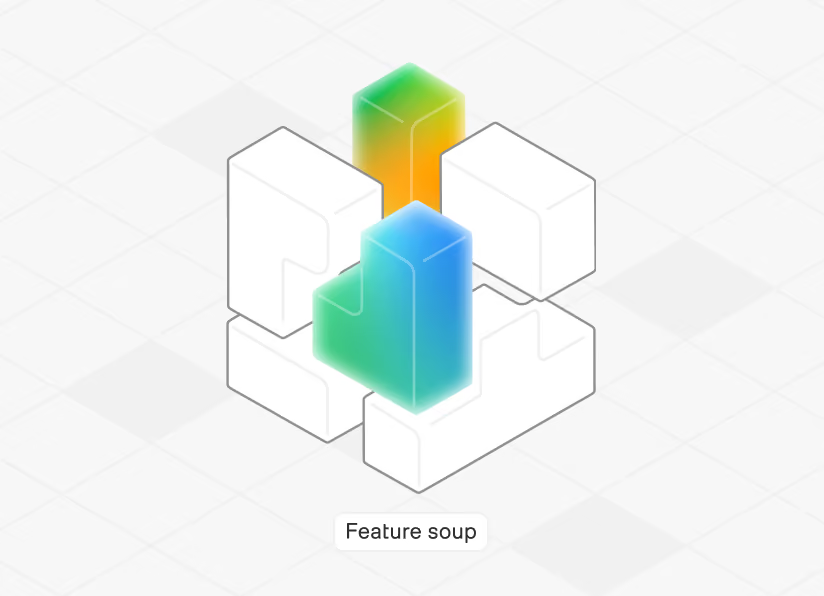
The value gets lost in the explanation
You describe the infrastructure and features. Buyers still have to work out what changes for them.
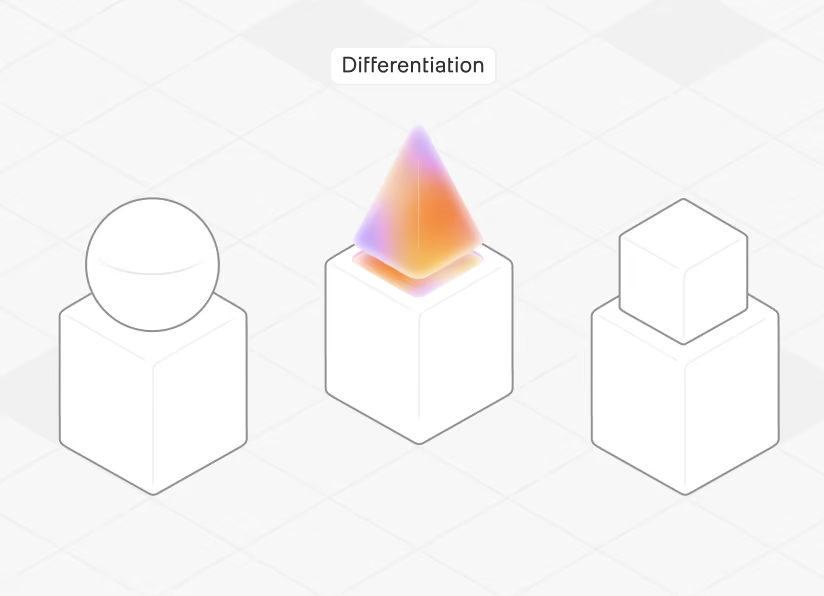
The reason to choose you stays vague
You claim an advantage. Buyers need to compare it with another provider or their current setup.
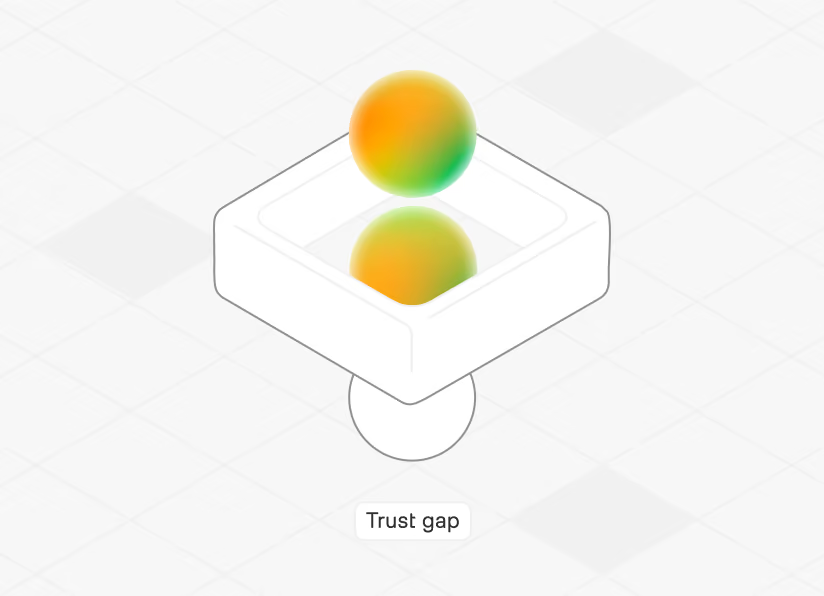
The promise goes further than the proof
You promise reliability, security, or control. Buyers need to check what supports and limits that promise
Your teams tell different stories
Buyers meet different explanations of the same offer across product pages, documentation, and sales conversations.
Buyers need proof before they move forward
B2B website stats you can’t ignore or argue with
¹ FCA, Financial Lives 2024, figure 5.18. UK financial services: 1,623 reported occasions when customers obtained information from their provider. Includes websites, apps, social media and written replies. Published 2025.
² Signicat / Sapio Research, The Battle to Onboard, 2022. Survey of 7,600 consumers who had applied for a financial product across 14 European countries. The 68% refers to stopping during sign-up at least once in the previous year.
³ Gartner sales survey of 632 B2B buyers conducted in August through September 2024
of the time, customers said their provider’s information helped them decide what to do¹
of surveyed consumers stopped partway through signing up for a financial product²
of surveyed applicants worried about how providers use and protect their data²
61% of B2B buyers prefer a rep-free buying experience. Your website increasingly has to run the conversation itself.³
A smart way to look at the website through customers’ eyes
Framework & prompt
A practical page with the methodology, questions, assessment criteria, FinTech-specific context, and benchmarks.
.md file with an AI skill
Upload it to your AI environment — Claude, ChatGPT, Gemini or Grok. Paste the prompt, add your website URL, and send.
What does a buyer need to know to choose you?
What is it?
Can they understand what the product actually does?
Is this for me?
Can the right buyer recognize their situation and fit?
What problem does it solve?
Is the product connected to a client job?
Why should I care?
Is the value clear and supported?
Why should I trust it?
Are security, regulatory, and ops risks addressed?
Why this instead of the alts?
Can buyers see where the product is different?
Can I evaluate it?
Can buyers find the info needed to make a choice?
What should I do next?
Is the next step clear enough?
For FinTech experts responsible for product & marketing layers
The toolkit focuses primarily on virtual payments and payment infrastructure, digital banking & neobanking, plus spend management.
Product marketing leaders
For teams launching products, entering markets, or clarifying the product story.
Product managers
For teams connecting product capabilities with customer jobs and the buying experience.
Brand & communications leaders
For teams looking for gaps across the customer journey and company narrative.
Marketing & growth experts
For teams reviewing positioning, messaging, and conversion.
What shapes FinTech buying decisions

Product & brand positioning
Who you're for, what job you solve, what you offer, and why you're different.

Trust & risk weight
Security, regulatory context, legal identity, funds, data, fraud, and operational risks — where relevant to the product.

External proof
Customer evidence, implementation details, performance claims, certifications, and other proof behind website promises.

Evaluation
Pricing, integrations, docs, implementation requirements, and the information buyers need before they talk to sales.

Conversion paths
Whether the site takes the right buyer from understanding the product to the right next step.

Cross-site consistency
Whether the homepage, product pages, pricing, docs, and trust content support the same narrative.
Apply our toolkit now to address the buying barriers
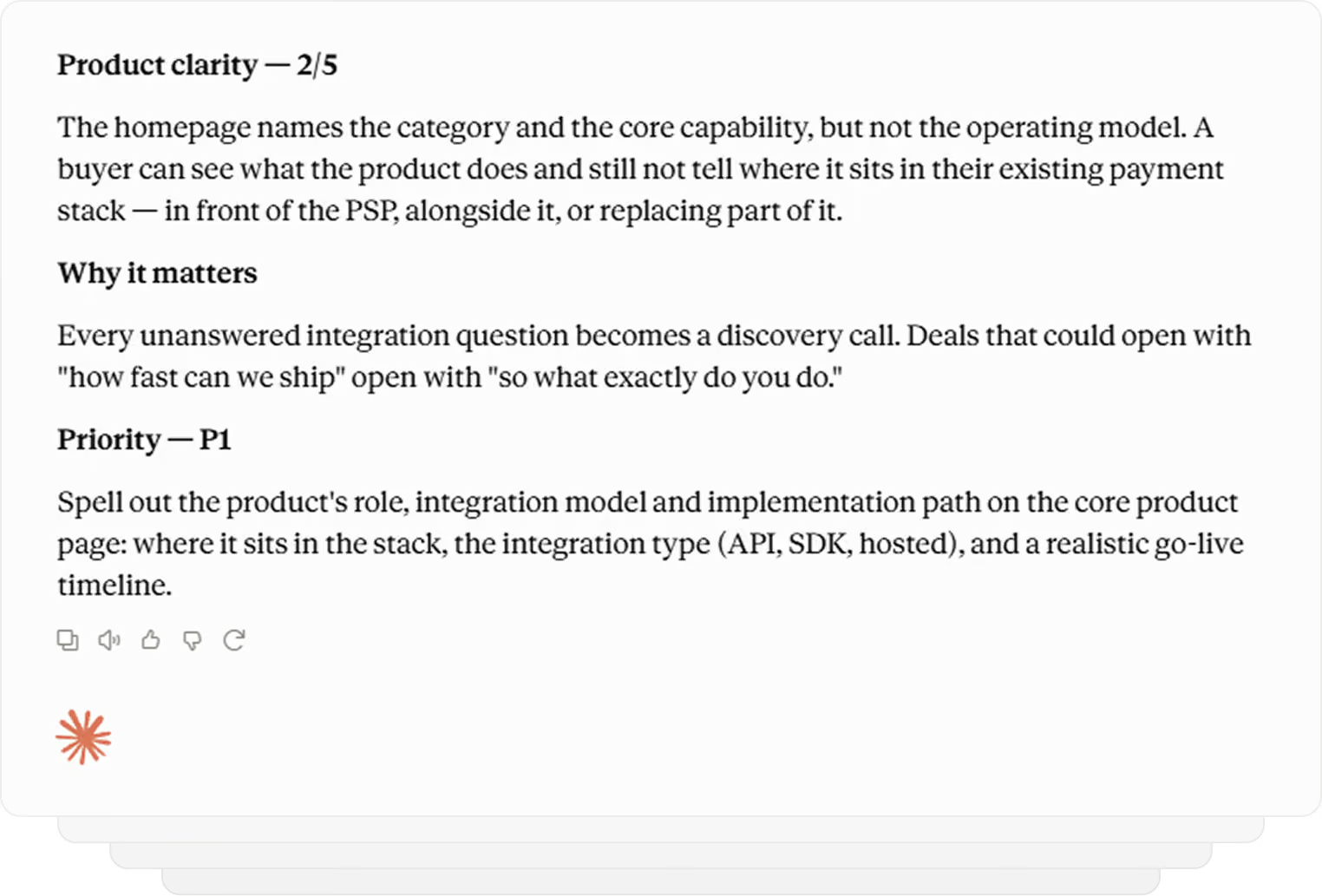
See what the FinTech website diagnosis looks like
When to use this toolkit

Assessing website performance
Check how your website supports buyers through the funnel, from understanding the product to taking action. Use the findings alongside your analytics and buyer research.

Prioritising website improvements and redesign
Identify which messages, evidence and next steps need attention first. Use the findings to plan website improvements and define what your team should address in a redesign.

Launching or expanding your offer
Before your landing page goes live, check how it explains your new product, feature or expanded offer, including its value, requirements and the next step for buyers.

Going to market after repositioning
Before publishing your updated website, check that your pages reflect the new positioning: who the product is for, why buyers should choose it and what supports that choice.

Entering new markets or segments
Before entering a new market or segment, check that your website addresses the audience’s needs and explains product availability, relevant use cases and requirements.
Start with your website
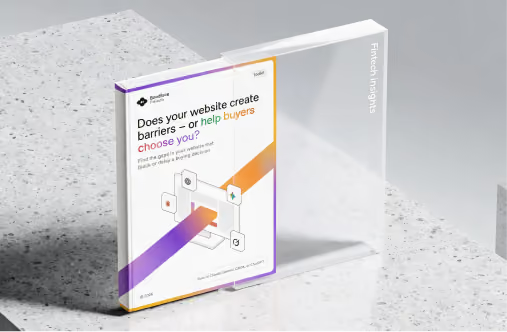
Grab the “Buying barriers toolkit” to assess your website and if you want to discuss future findings with us — let’s talk.
Meet the team
Our team brings together experts in market research, brand strategy, marketing, product strategy, UI/UX design and web development for FinTech businesses.
on toolkit


Max is the Founder and CEO of Goodface Fintech, a digital product and design consulting firm focused exclusively on FinTech.
He has spent more than 10 years working with technology companies in finance, across product design, digital experience, branding, and business growth. Over that time, he has worked with companies at different stages — from growing FinTech businesses to established financial companies evolving their digital products.
He focuses deeply on the challenges that emerge as FinTech businesses move into their next stage: expanding into new markets, developing new products, improving customer experience, or changing how the business competes. He brings together product, brand, marketing, and digital experience to look at these challenges as parts of the same system.
Key role at Goodface Fintech
Max leads the firm's direction, positioning, and client work. He is closely involved in defining business priorities, finding where growth gets constrained, and shaping the expected business changes across the customer-facing layers.

Dima works at the point where a FinTech product needs to become clear to the market.
At Goodface Fintech, he works with product and marketing teams on positioning, messaging, and content — from figuring out what a product should say about itself to turning that thinking into website and product copy. His starting point is usually the same: understand the product, the market, and customers’ decision logic before they choose a company.
Over the past four years, Dima has worked with B2B companies across FinTech, AI, and health tech. His work covers in-product messaging, content strategy, market intelligence, and the Jobs-to-Be-Done framework tied to a specific ICP or segment.
Key role at Goodface Fintech
Dima leads content and messaging across the FinTech practice. He works closely with product, design, marketing, and leadership teams to keep the story consistent as products change, new markets open, and the business moves into its next stage.


Dmytro is Head of Delivery at Goodface Fintech, where he oversees how digital products move from strategy and design into execution.
With 20 years in tech, he has worked across product design, development, and delivery, partnering with founders and senior teams on complex digital products. He turns strategic business and product decisions into a clear delivery process that teams can follow.
At Goodface Fintech, Dmytro works across product, design, and development to keep projects focused, make decisions at the right level, and maintain a clear path from the initial idea to the finished product.
Key Role at Goodface Fintech
Dima shapes the delivery process across FinTech projects, from planning and team setup to day-to-day execution. He works closely with senior specialists to resolve delivery issues, keep decisions moving, and give clients clear visibility into the work.


Diana works with fintech businesses when they grow, scale, or pivot. She helps founders and leadership teams articulate hypotheses, understand what drives customer behavior, weigh realistic options, and commit to a direction with an awareness of risks and opportunities.
Her career spans 11+ years across fintech, anti-fraud, supply chain, and industrial sectors, with clients across the UK, DACH, US, and MENA.
Key role at Goodface
Diana helps businesses decide how to move forward and works with key stakeholders on planning the next steps. She then stays close to implementation, working alongside the cross-functional team to keep execution aligned with the chosen direction.
Outside of commercial work, Diana runs nonprofit initiatives. And in her free time, she enjoys road trips, going for long walks, and writing fiction.
FAQ
Answers to
common questions
What kind of website problems can it help uncover?
It helps identify gaps that affect how buyers understand, trust, and evaluate a FinTech product — from unclear positioning and product explanations to missing proof, trust information, value prop, implementation details, or next steps. The review works through eight buyer questions, with additional checks based on the FinTech product and buying context.
Is it useful if our website is already performing well?
Yes. The review can show what already works, what remains unclear, and what deserves attention next. It’s particularly useful when the business has changed — for example, after a product expansion, new market entry, positioning change, or website review.
Can AI really tell me whether my website is working?
It can assess what the website shows and supports. It can’t know what customers actually do unless you provide behavioural or commercial data.
The skill separates Observed, Inferred, and Needs validation findings, so it doesn’t present an interpretation as a measured customer behaviour.
Does the review measure conversion or predict revenue?
No. It identifies communication and decision risks that may affect understanding, trust, evaluation, or action. Actual conversion, sales-cycle length, ROI, win/loss reasons, and customer behaviour require analytics, research, or other supporting evidence.
Will it tell me what to change?
Yes, where the available evidence supports a recommendation.
Findings are prioritised as:
P1 — Decision blocker
P2 — Decision drag
P3 — Clarity improvement
Recommendations connect the evidence to the buyer impact and the proposed change.
Do I need to give the AI a detailed brief first?
No. You can start with your website and the available context. The skill is designed to infer missing buyer context from the site when necessary, while marking those assumptions as Inferred rather than treating them as facts. The more relevant context you provide, the more specific the review is.
Can it assess trust, compliance, and security claims?
It can review how those claims are communicated and whether the site provides relevant evidence. It can also identify where external verification is needed.
For regulatory status, security certifications, customer funds, and similar claims, the skill distinguishes what the website states from what can actually be verified.
Does it understand the difference between FinTech products?
Yes. The review uses a relevant FinTech lens based on the product and buying context. For example, payment infrastructure raises questions around integrations, coverage, operations, implementation, and possible risk.
Digital banking requires a different set of checks around eligibility, fees, regulated entities, funds, and support. Spend management requires a different view of workflows, controls, integrations, and financial operations.
Can I use the framework without AI?
Yes. The PDF explains the method, models and assessment criteria, with a worked example. Use it for a manual assessment on your own or with colleagues.


